Compressed air preparation – clean and efficient
28. February 2024
Efficient compressed air preparation for reliable use
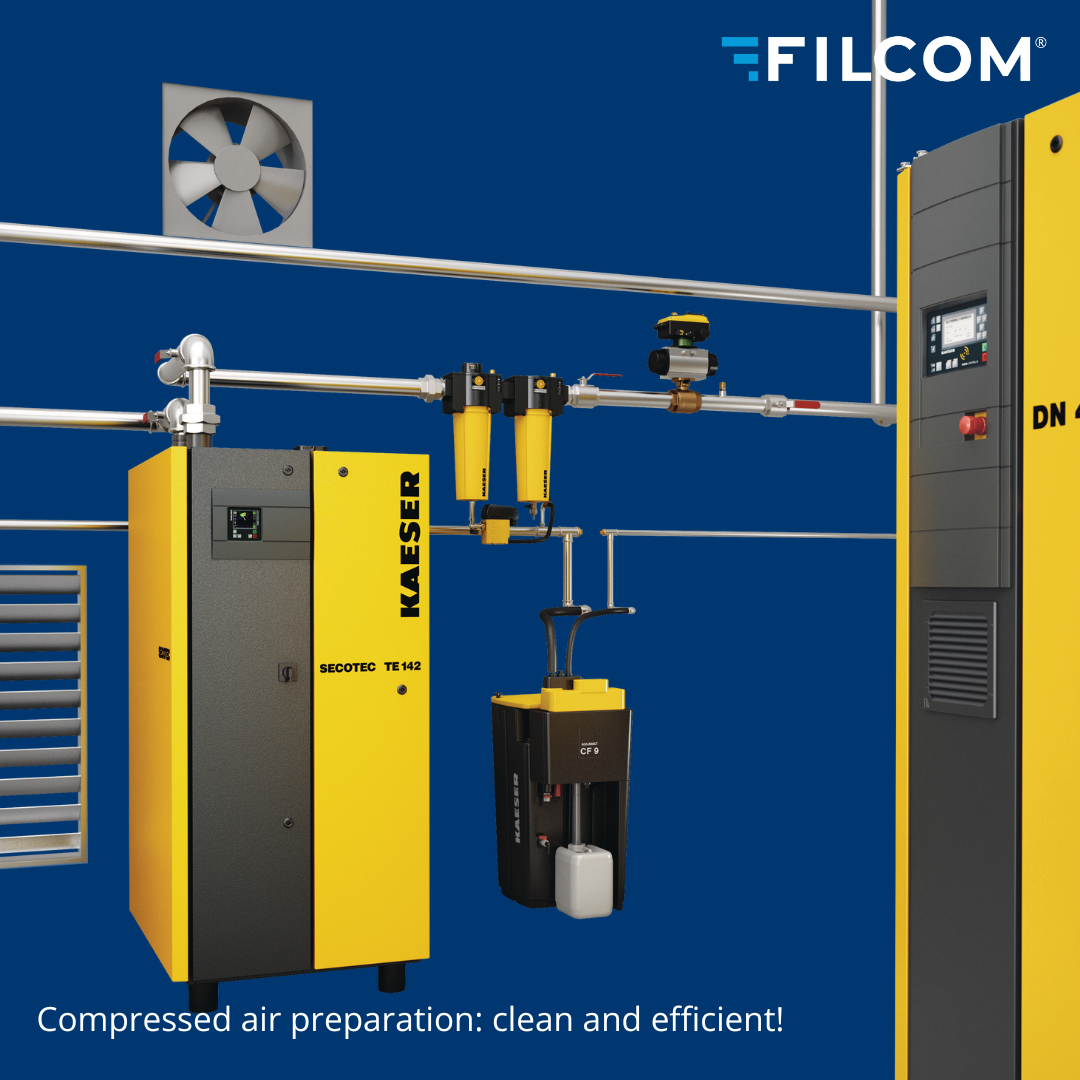
The quality of the compressed air plays a crucial role in the efficient operation of a compressed air supply. Natural enemies such as water, oil and dust can lead to corrosion, contamination and the formation of dangerous microorganisms. Compressed air treatment components such as condensate traps, dryers and filters are effective against these problems. When used correctly, these reliable helpers not only offer high process reliability, but also optimal cost efficiency. Systems that impress with long, trouble-free operation pay for themselves more quickly.
COMPONENTS OF COMPRESSED AIR TREATMENT
- Condensate: When using a compressed air system, significant amounts of water are often generated. The moist atmospheric air is compressed in the compressor and exits as compressed air that is 100 percent saturated with water vapor. As the compressed air moves in the container and the pipes, it cools and condenses into oily water or water mist. In order to reduce the proportion of liquid water in the compressed air stream, we recommend installing a water separator. This ensures that a large part of the resulting condensate is separated before the compressed air gets into the lines.
- Dryer: A compressed air dryer is used to reduce the water vapor. Three different processes have proven successful in practice: refrigeration dryers, membrane dryers and adsorption dryers. The choice of the appropriate drying method depends on various criteria, including the pressure dew point, the volume flow, the required compressed air quality for the specific application, as well as the economics of the system and the associated costs. Refrigeration dryers are generally preferred and offer protection against line corrosion, equipment failure and product damage, especially at ambient temperatures up to +3°C. The energy-saving refrigeration dryers from KAESER are characterized by highly efficient storage control, which ensures material-friendly operation and a stable pressure dew point thanks to a generously sized cold storage tank. In addition, they offer significant savings potential during part-load operation and during work breaks, as excess cooling capacity is temporarily stored in the thermal storage and can be used for drying without consuming electricity. Membrane dryers are often used as an addition to refrigeration dryers and serve as so-called end-point dryers for lower volume flows. Adsorption dryers, on the other hand, are used either at the beginning of the compressed air system or in the immediate vicinity of the application, depending on the type of application. They reach pressure dew points of up to -70°C and thus reliably protect control valves and overhead lines from frost. KAESER adsorption dryers ensure cost-effective drying of compressed air in sensitive processes. This is ensured by high-quality compressed air filters and efficient energy-saving controls. The desiccant aluminum oxide also contributes to a particularly high level of operational safety.
- Filter: When the ambient air is sucked in, various contaminants such as dust, moisture, oils, aerosols and microbiological components get into the compressed air. By using suitable filters, the correct particle concentration can be achieved gradually. The high-tech filters from KAESER are available in four filter grades and are suitable for filtering aerosols, dust and oil vapors. They can be used to provide compressed air as required in all purity classes in accordance with ISO 8573-1. In addition, KAESER filters are characterized by generously sized housings and filter surfaces, innovative flow guidance and high-performance filter media. You achieve up to 50 percent lower pressure loss compared to standard filters – and this is almost constant over the entire service life of the filter element. The result: reduced costs and CO2 emissions as well as relief for upstream compressors.
- Activated carbon adsorbers: In situations where the highest demands are placed on the quality of the compressed air, activated carbon adsorbers are indispensable. These special devices effectively remove oil vapors and unpleasant odors. Installed after compressed air drying and pre-filtration, they achieve residual oil contents of class 1 according to ISO 8573-1 and thus ensure the protection of sensitive production processes. The activated carbon adsorbers of the ACT series from KAESER are characterized by their particularly economical design. With generous filling quantities of high-quality activated carbon and consistently low pressure losses, they can withstand up to 12,000 hours of compressor operation without changing the activated carbon.
Weitere News

It’s better to be safe than sorry!
28. February 2024
FILCOM Service. We ensure reliable operation of your compressor station!

Clean air for the highest demands!
28. February 2024
With the iFix technology from Filtration Group Industrial.

The new FILCOM online shop is here!
28. February 2024
Discover now!